


The Kindling Gathering: seeding what comes next
17th February 2026
Share this article


Joe Roberson
Quick links
Seven collective learnings from 2 days of tech justice work, care and connection.
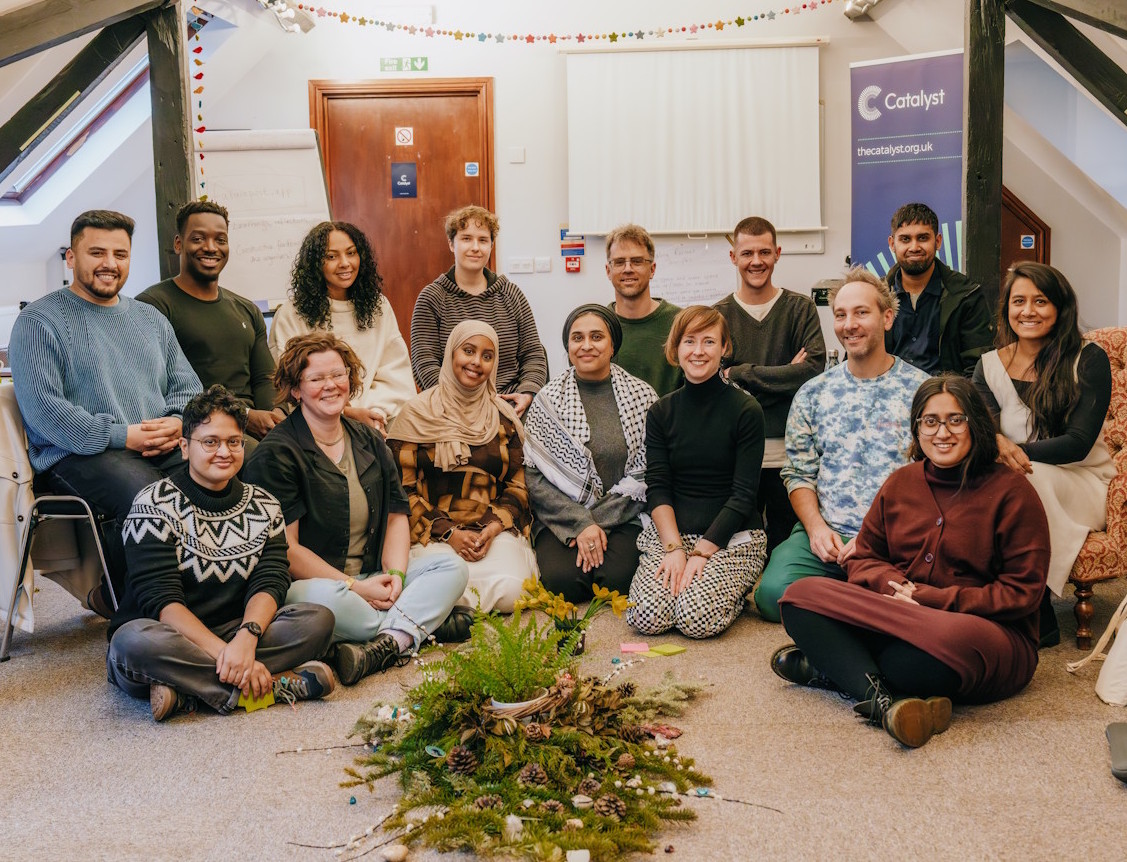
It’s been only eight days since we gathered for the Catalyst Kindling Retreat (4–5 February 2026). As we write this we are tired but still on a high from the connection and care we experienced, while also feeling a mix of fulfilment, tiredness and gratitude about Catalyst CIC closing in just 6 weeks.
We came together to celebrate 10 new grantees from our Kindling programme and to explore what we hope their projects will seed next. As Nish Doshi put it: “Catalyst closure… is actually a project of seeding rather than being an end; a project to nurture and regenerate the tech justice movement rather than destruction and doom.”
1. Regenerative cycles, in practice
Catalyst as a “vehicle” is closing, but the work is not. Kindling is an investment in the future of the tech justice movement: supporting valuable new experiments and connecting network members who may not have yet had the chance to connect. The retreat showed us this in people’s passion, enthusiasm, determination and willingness to share and learn from each other. In conversations about closure, we heard good feedback about our efforts to make it an intentional ending that redistributes resources and helps the wider network keep growing.
“Oak trees… support more life once they’ve fallen onto the forest floor than they do when they’re alive.” – Kate, Catalyst
2. Tech justice is a stance we take

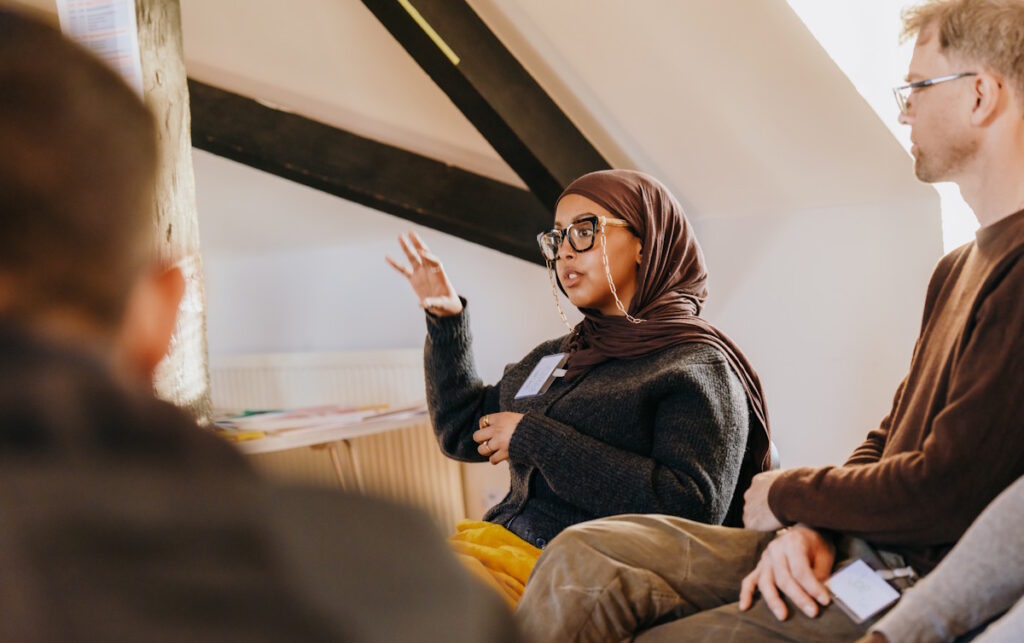
Kindling grantees brought a range of “entry points”: youth safety, digital healthcare access, online harassment, community governance tools, AI bias and futures narratives and reconnection. This diversity of people and organisations vividly showed how tech justice isn’t a specialist “tech corner” for “tech people”. It made it easier to name tech justice as a political stance about power, harm, and agency in the systems we move through every day. At a time when societal harm is becoming increasingly normalised we can all make a decision to notice the human-made products, structures and systems shaping who gets to belong, access care, and stay safe.
“Tech justice is an approach that is critical of the status quo and recognises that no technology is neutral. It brings a political analysis into our understanding, use and creation of technology.” – Ellie, Catalyst
“Tech justice to me looks like technology that facilitates joy, that facilitates liberation… technology that doesn’t cause harm, that isn’t built on the back of colonialism and extractivism, but facilitates connection. While also understanding where we don’t need technology.” – Ramla, Decolonial and pluriversal AI futures.
3. Tech harms are ordinary, intimate, and here
As a group we were collectively moved by some of the stories grantees shared in their mini-presentations:
- Choosing a paper process for a Windrush compensation application because the digital route was hard to navigate. The paper route then took months longer to process, impacting personal stress, financial wellbeing and exclusion.
- Facing the blunt reality that if someone struggles to access health services online – especially in increasingly digital health systems – then their access gets shaped by their search skills, not need.
- Watching harms that arrive via language and “information”, like anti-trans misinformation being laundered into the language of decision-makers through AI large language models.
- Observing social media platforms reducing their investment in safety features made the harassment problem feel sharper, because the burden gets pushed back onto those being targeted.
These are signals of how design choices that favour the majority or profit impact minoritised people.
“Essentially if you can’t Google the services that are available to you, you can’t access them.” – Sadaf, Anthronation
“Recently a lot of the platforms have entirely gutted a lot of their trust and safety investment and those teams.” – Madhuri, WeLivedIt.AI
4. Solidarity: both a need and a feeling
 We structured the retreat to support connection, and through this solidarity. We ran mini-presentations from each project, 6 open space sessions (each with 2-3 options), shared reflection sessions, a games evening, morning stretching and long dinner breaks.
This created a diversity of different opportunities and modalities for connection that went beyond networking performance.
Solidarity is often expressed in small acts, or expressions of honesty. Like a grantee leaving a post-it contact after another’s presentation because they wanted to help with youth work connections.
“Being here kind of makes you feel less alone in the work that you’re doing…” – Stephanie, Seen not Sorted
“Because QueerAF is an LGBTQIA+ publisher… we sit in a real niche… it’s really good to come out of that into the broader movement and be reminded that we’re also working alongside all of these people who are doing all these other things.” – Ludo, QueerAF CIC
In their post-event feedback some people expressed that they would also have liked more structured opportunities for 1-1 connection with others.
5. We practised care as infrastructure

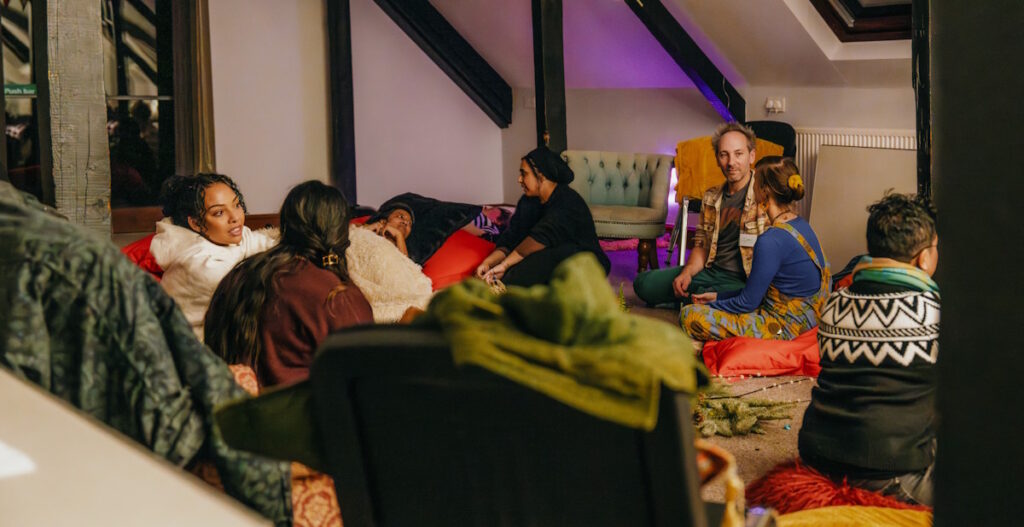
We tried to make care practical. To generate a culture of care through things like: a sensory quiet room, soft lighting, a snug corner filled with soft rugs and large beanbags in the main room, a choice of beautiful chairs and a yoga ball to sit on; grounding practices and a nature centrepiece. We also made explicit invitations to “lie down and rest when you need to”, and to let go of ‘perfect’.
This shaped the tone of conversations, and the honesty we could hold.
“We felt like we’re not really on the cutting edge of tech… so it’s been valuable to feel that sense of welcome and inclusion and… get a real sense and belief that [our conversations] will go somewhere.” – Daniel, Coexist
Offering both rest and opportunities to participate
At the same time we recognise that though we explicitly made everything optional the retreat still invited a lot of participation within a compressed timeframe. For some people coming with burnout or acknowledging their chronic busyness this left them with difficult choices to make between their needs for participation and rest.
“The first day ended too late – the next started too early! This required a lot of energy and meant I’m leaving tired and drained :(” – Anonymous (via end of session feedback)
“I think everything was great and I can’t fault the space or sessions. I’ve come into this after a year of care-giving and running a business so I am very burnt out. I think these spaces try to acknowledge and respect that but for someone in my position it can lead to participation that isn’t as meaningful as I would have liked” – Anonymous (via end of session feedback)
6. “Nothing about us without us”: voice, governance, and codesign

All the Kindling projects are, in different ways, asking the same question: what changes when the people most affected are shaping the project / research / tool / governance? This is what tech justice looks like in practice. For example:
- participatory design sessions with women with lived experience of misogyny online
- community listening circles and co‑written outputs so Black and Brown residents’ own words shape how everyday digital systems are described and mapped
- investigations designed with independent community researchers and organisations, with publication planned through community media.
“The project is trans led… we’ll be working with an independent trans researcher… between three and five different trans organizations… both the way the research is done and the way that’s communicated are going to be led by trans people.” – Ludo, QueerAF CIC
“We don’t want to tick a box or kind of have things in bullet points, instead we want to lead with people’s words, people’s voices…” – Stephanie, Seen not Sorted
7. We need resourcing that matches the moment
Many justice projects and organisations find it tough to resource their work. As well as the need for solidarity they need funding programmes that support their work and connect people so that solidarity grows. People liked that Kindling is sparking intentionally small experiments in a way that travels through relationships and learning. But at the same time they named how intimidating the wider financial system feels when it prioritises competitiveness over collaboration and capital over connection.
So we want funders to back the people creating pockets of agency within our unjust systems. Weaving Liberation’s forthcoming grant programme offers a concrete direction for what resource support could look like after Catalyst closes.
“Funders need to do stop depoliticising issues and fund the people actually doing the work on the ground” – Salmana, Weaving Liberation
“It’s opened up a new world for us because previously we only looked at football and now we’re looking at tech justice.” – Jahed, Birmingham Tigers
Carrying this work forward
If anything is worth carrying from Kindling, it’s that these are precise tech justice interventions, led by lived experience, at a time when the harms built into our digital systems are too often treated as the price of progress.
We’re asking you to stay with this new work: follow the Kindling grantees, amplify what they publish through our final newsletters.
And – if you’re a funder or you influence one – put money behind the growing web of self‑determination that is forming inside our tech systems.
Final words
“A heartfelt thank you to all the Catalyst team. It was a pleasure to attend the retreat and learn more about our fellows’ work and projects. I was truly touched by the strong sense of empathy and respect within the network. It was a transformative and amazing retreat for me, both professionally and personally.” – Tamim, Afghanistan and Central Asian Association
“It feels… intimidating… it seems almost insurmountable, but I like a challenge… we can do it, you know, community-wise from the ground up.” – Hameed, Black AI Futures
“I’m very hopeful about the future of tech justice… it’s a balm to feel the real glimmers of brightness, excitement and connection being made.” – Ellie, Catalyst

After Catalyst: legacies and new homes
How stewards are carrying Catalyst’s tech justice work into its next chapter.

What our ending reveals
Systemic lessons and calls to action from Catalyst CIC’s closure.

Weaving Liberation: organising for tech justice across borders
Weaving Liberation works across Europe (including the UK) to support digital justice organising. Here’s what they do and how to connect.

What we are learning about tech justice grant making
We received more applications than we could fund. This is a reflective look at what we learned from saying yes, saying no, and trying to...

How 2025's charity digital trends are deepening inequity
Many organisations are investing in tools before investing in justice for the communities they serve. Here are some actions organisations can take in solidarity with...

How we’re choosing stewards for Catalyst’s legacy
How we’re deciding who will look after Catalyst’s tech‑justice assets after March 2026, and what we’re learning about endings, coalitions and care.

Stewarding Catalyst’s Legacy: an invitation
Catalyst’s legacy belongs to the network. You can help sustain and grow it. ⏲️ Submission deadline: Tues 18 November, 5pm 📝 Submissions: Expression of interest...
Kindling Programme: grant funding
Catalyst is seeking 10 individuals and organisations wanting to explore, develop or sustain work that puts tech justice into practice.

Catalyst CIC will close in March 2026
What ends, what persists, how to help steward the legacy.

Sheeza Shah on her time at Catalyst
As Sheeza Shah steps down as a Catalyst co-director, we asked her to share honest reflections on her journey, the meaning of tech justice, and...

The Catalyst network’s 2024/25 highlights
2024/25 was a turning point for Catalyst. Becoming an independent Community Interest Company let us put justice at the heart of our work. Our achievements...

Inside the Tech Justice Road Trip #7
Project members reflect on their time on Catalyst's Tech Justice Road Trip. They share some of their insights and gains from the project. They also...

Inside the Tech Justice Road Trip #6
Project members look back on their past 2 weeks. They share their progress and how their work has impacted others. They also share how belonging...
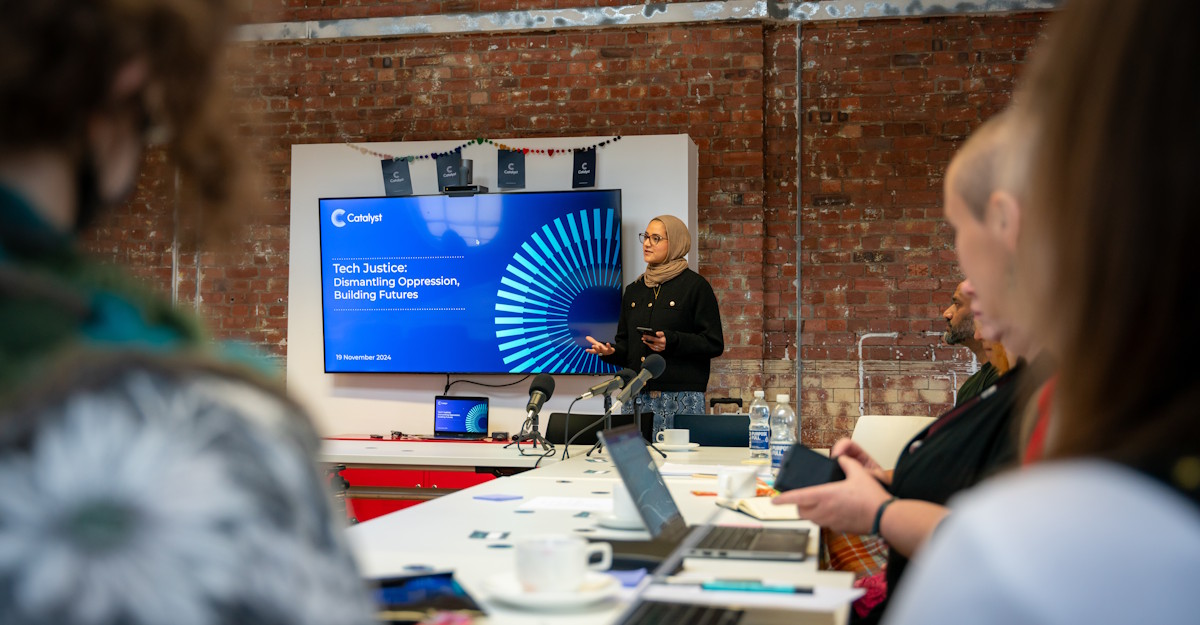
Building a more equitable AI future
AI can increase injustice, or drive liberation. Our latest Funders' Forum brought together not-for-profits and funders to explore who AI is harming. They also considered...

Inside the Tech Justice Road Trip #5
Project members reflect on their past 2 weeks. They share thoughts and opinions on AI, and how to help non-profits focus on tech justice. These...

Inside the Tech Justice Road Trip #4
Project members look back on their work so far. They tell us what’s been on their to-watch and to-read lists. And we find out what's...

Inside the Tech Justice Road Trip #3
Project members share their takeaways from the project’s storytelling workshop and describe their Ustopias. They also share some favourite examples of tech justice.

We piloted a wellbeing support fund: here’s what happened
What if workplace financial support for mental and emotional health was simple, accessible and stigma-free? What happens when we trust employees to decide what’s best...

Inside the Roadtrip #2: defining tech justice and the story so far
We ask project members to describe what tech justice is for them and how they imagine decolonising their evaluation work. They also tell us what's...

Degrowth, discovery and power sharing: why we will be doing less from April 2025
A new era is coming. Soon Catalyst will no longer be an organisation funding a network. Instead we'll be a 'lean organisation, supporting the tech...

Inside the Tech Justice Roadtrip #1: inspiration and challenge
Ever wondered what its like to be part of a sociocracy-inspired, multi-partner tech justice project working on feminist AI, participatory grant making and radical co-design?...

Introducing our new project: The Tech Justice Roadtrip
Working with communities to understand their experience of tech injustice. Reimagining ways that tech can liberate people. Supporting a movement.

Welcoming Sheeza, Kate and Hannah to Catalyst
New skills and experience arrive to freshen up the team. But who are they? And why did they choose to join Catalyst?
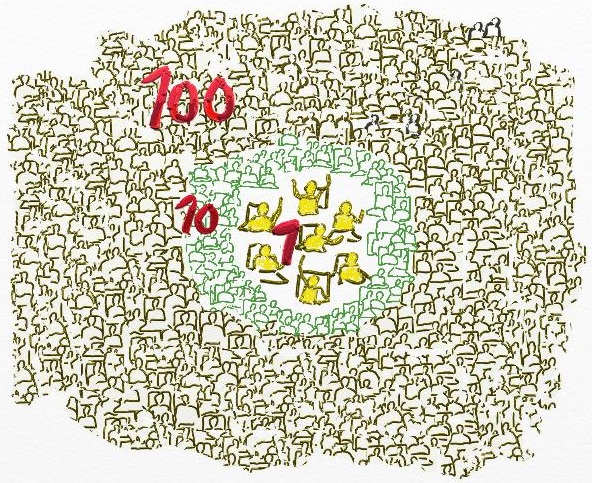
Network views: How AI creates injustice and inequity
We asked the Catalyst community “How do you think AI will (or is) contribute to injustice and inequity in the world?”.

Network views: How AI can create a fairer, more just world
We asked some of the Catalyst community the question “How do you think AI can (or is helping) create a fairer, more just world?”

Who is being left out? Systemic injustices in charities’ approach to digital work
The 2024 Charity Digital Skills Report reveals systemic injustices in digital work, highlighting that small, marginalised charities face significant digital inequalities and need more support.

Two partners, much ruminating, and goodbye to X
Find out why Passion4Social and Catalyst are leaving X, opting to use LinkedIn for community engagement and considering using new platforms to reach our audiences...

Five values, Two perspectives, One outcome
This article describes the partnership between Catalyst and Passion4Social. It is not a typical client-partner relationship. It goes far beyond that!

CAST and Catalyst: the journey, the transition – and beyond
CAST incubated Catalyst for five years, now it's independent. Collaborative review led to Catalyst becoming a Community Interest Company (CIC), with a new vision and...

Looking back, looking ahead: a peek inside Catalyst’s transition
Jo Morfee talks about what the team have been learning and feeling as Catalyst becomes a CiC and adopts a new vision.

Announcement: Catalyst will become a Community Interest Company in April 2024
Following a successful five-year incubation period by CAST, Catalyst is now transitioning to become an independent organisation.
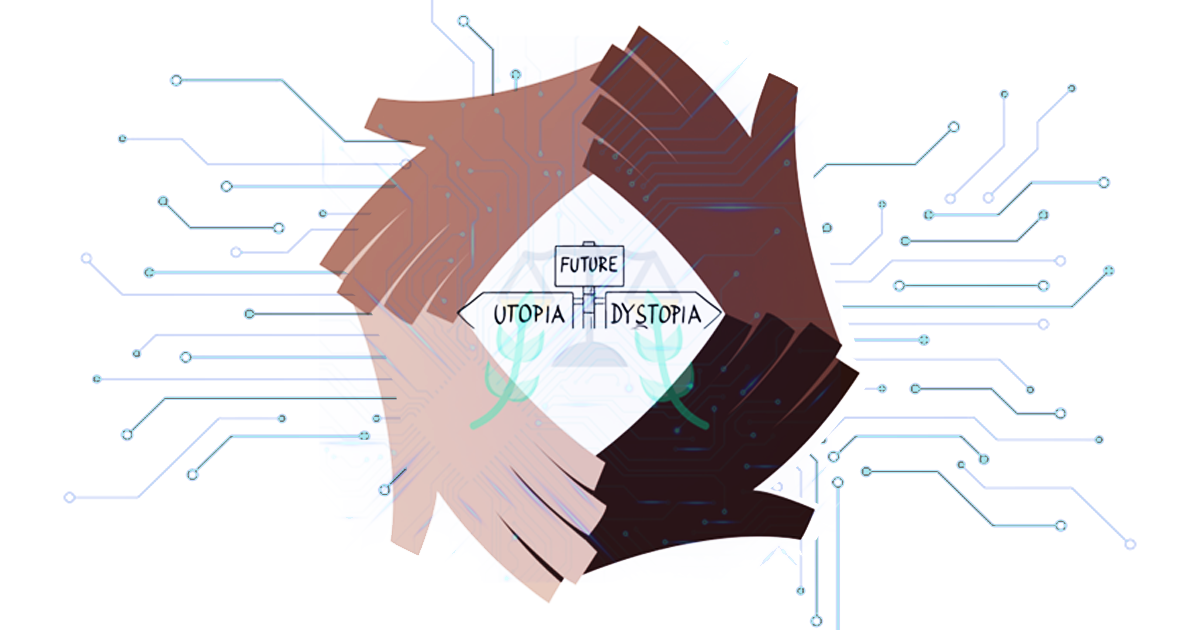
It’s time for an ‘Ustopia‘: The Emerging Tech Justice Landscape in the UK
Dr. Ruha Benjamin advocates for 'Ustopia', challenging tech's harmful impacts, and urging community empowerment. Catalyst's recent research report explores Tech Justice in the UK, emphasizing...