


Looking back and moving forward: Sheeza Shah on her time at Catalyst
7th July 2025
Share this article


Joe Roberson

Quick links
As Sheeza Shah steps down as a Catalyst co-director, we asked her to share honest reflections on her journey, the meaning of tech justice, and what comes next. Here, Sheeza speaks in her own words about the impact of Catalyst, and why the work matters.
What first drew you to Catalyst?
As a founder of a tech for good company, I’ve always cared about building technology that serves marginalised communities. Too often, big tech causes harm, and I’ve spent years trying to build and resource alternatives.
When I came across Catalyst Network, their approach to tech and power really stood out. I appreciated their focus on sociocracy, power-sharing, and non-hierarchical leadership—frameworks I’ve spent years learning from and co-designing. Returning to work after maternity leave, it felt safe and familiar to step into an organisation that shared my values.
What are you most proud of from your time at Catalyst?
The November funders forum really stands out for me. I loved the energy and the honest conversations people brought to the space. We centred projects, initiatives and stories after the 2024 riots, which were rooted in anti-migrant, anti-Muslim, and anti-Arab sentiment. Creating a space for healing and naming pain made me feel seen—especially as a Muslim, which isn’t something I’m used to in non-Muslim organisations.
I’ve also loved working with the Catalyst team. Our regular check-ins, culture meetings, and the way we made space for our personal lives have meant a lot to me. It’s rare to see colleagues go out of their way to honour Islamic values over organisational norms, and that really cemented my desire to work here.
I enjoyed holding planning, tech and data and fundraising domains. I’m most proud of the evolution of our funders’ forum. Bringing together funders and grassroots voices to talk about dismantling oppression and building tech justice solutions was a highlight. Co-leading the ethical funder framework and business model work with Jo Morfee was also meaningful, especially as we checked for alignment with Islamic trade practices. Our online session on building equitable AI futures was also an insightful experience.
I’m proud of the Tech Justice Circle and the chance to showcase the work of everyone involved to our funders through various channels.
What does tech justice mean to you?
For me, tech justice means working with communities and amplifying voices that are often overlooked. Using participatory design has been powerful.
The Tech Justice Circle is a great example. We worked directly with grassroots groups from marginalised backgrounds—people with lived experience of being exploited or overlooked. The aim was to centre their expertise and let them design values-led tech. That’s the future I want to see.
Where has Catalyst done well, and where has it struggled?
I’m proud that Catalyst has worked to share power and resources with grassroots organisations. Distributing grants and letting partners decide how funding is used felt like real power-sharing. I’ve valued being part of that.
I also appreciate the comms team’s work in making sense of the complexity and sharing both the good and the hard parts with the world.
We’ve had tough conversations and tried to make space for people’s pain and experiences of injustice. We’re still learning, but we’ve tried to put safety and repair at the centre.
Funding has been a big challenge. Many organisations we admire have folded this year. The wider world—exploitation in Congo, genocide in Palestine, the dehumanisation of people from the global majority—means grief and systemic change go together. Sometimes it feels impossible to dismantle such a corrupt system, and it can be overwhelming.
But I’ve found comfort in seeing people bring their whole selves to our gatherings and in reading about the impact of our network.
What have you learned?
I’ve learned a lot about participatory design and making space for others. It’s not always easy to communicate the pressures of being a director, especially with all the assumptions people have about power. Investing in cultural spaces that help break down those barriers has been important.
Personally, I’ve learned how hard it is to juggle being a parent to two young daughters and leading two organisations part-time. As passionate as I am about tech justice, I’ve learned it’s sometimes necessary to step back and not push beyond my limits—making space for others who have the capacity to step in. I’m leaving Catalyst in good hands and feel honoured to have learned from so many talented people.
How have Catalyst’s values shaped your work?
Putting equity, interdependence, and inclusion at the centre has kept me grounded. These values push me to check my own biases and make sure my actions match what we stand for.
I try to pause, get feedback, and learn from everyone we work with, then adapt based on what people need and experience.
Have you noticed any shifts in how people talk about technology and power?
I’ve seen a heartwarming response from people we’ve connected with. Joining Catalyst opened my eyes to so many conversations and projects I didn’t know about before, just because we found a shared language in tech justice.
Seeing the Tech Justice Circle bring people together has shown me the incredible grassroots work happening across the country. I have especially been excited by Shaf Choudry’s contributions to Catalyst, including the evidence repository on 2023-25 tech harms and injustices. Discovering groups like Identity 2.0 and the Muslim Tech Manifesto through Muslim Tech Fest has been reassuring—we’re seeing a real shift in how people talk about tech ethics and justice.
People are waking up to the harms of big tech and want to build something different. That’s been validating and comforting for me.
What worries you?
Most conversations about tech justice are still happening in small circles. Many people are still fascinated by AI and want to replicate Silicon Valley here. There’s still a lack of awareness about the harm caused by tech that puts profit over people, and I worry we’re heading for a hard awakening as a society.
What’s next for you?
I’ll be focusing on UpEffect, the organisation I founded in 2016. We’re designing equitable funding tools for entrepreneurs from the global majority. I believe finance sits at the heart of a lot of injustice, and I want to revive the original essence of Islamic economics—championing wealth equality, fair trade, and equitable partnerships.
I also want to spend more time with my daughters and make space for rest and repair.
Even as I step down as a director at Catalyst, I still believe in the need for infrastructure that supports tech justice organisations. I’m sure I’ll keep contributing to this work in some way.
Do you have a message for Catalyst’s network?
A message of hope: to anyone feeling disheartened by what they see in technology: there are amazing people and organisations doing important work to shift things. If you have a platform or resources, use them – and use them boldly. Collaborate with others who share your goals. This work can’t be done alone; systems only start to break when we act together.

Thankyou, Sheeza 🙂
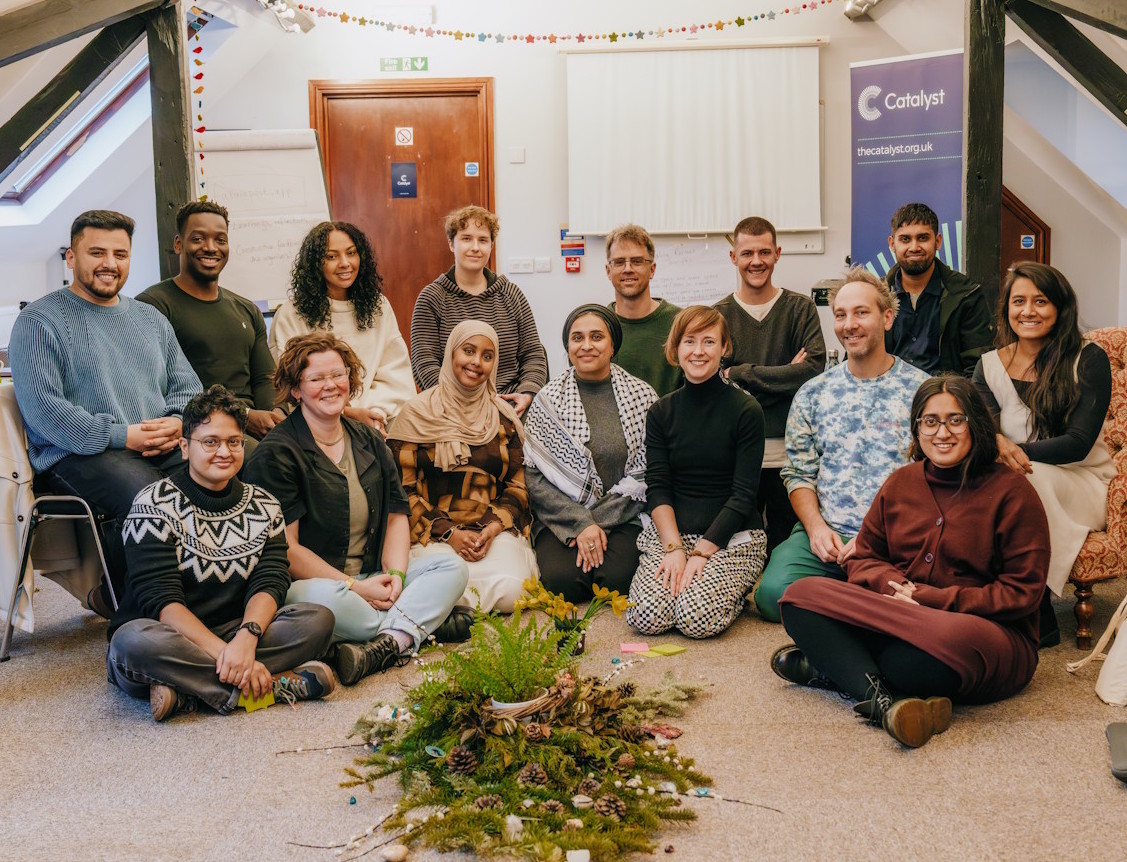
The Kindling Gathering: seeding what comes next
Seven collective learnings from 2 days of tech justice work, care and connection.

Weaving Liberation: organising for tech justice across borders
Weaving Liberation works across Europe (including the UK) to support digital justice organising. Here’s what they do and how to connect.

How 2025's charity digital trends are deepening inequity
Many organisations are investing in tools before investing in justice for the communities they serve. Here are some actions organisations can take in solidarity with...

Kindling Programme: grant funding
Catalyst is seeking 10 individuals and organisations wanting to explore, develop or sustain work that puts tech justice into practice.

The Catalyst network’s 2024/25 highlights
2024/25 was a turning point for Catalyst. Becoming an independent Community Interest Company let us put justice at the heart of our work. Our achievements...

Inside the Tech Justice Road Trip #7
Project members reflect on their time on Catalyst's Tech Justice Road Trip. They share some of their insights and gains from the project. They also...

Inside the Tech Justice Road Trip #6
Project members look back on their past 2 weeks. They share their progress and how their work has impacted others. They also share how belonging...
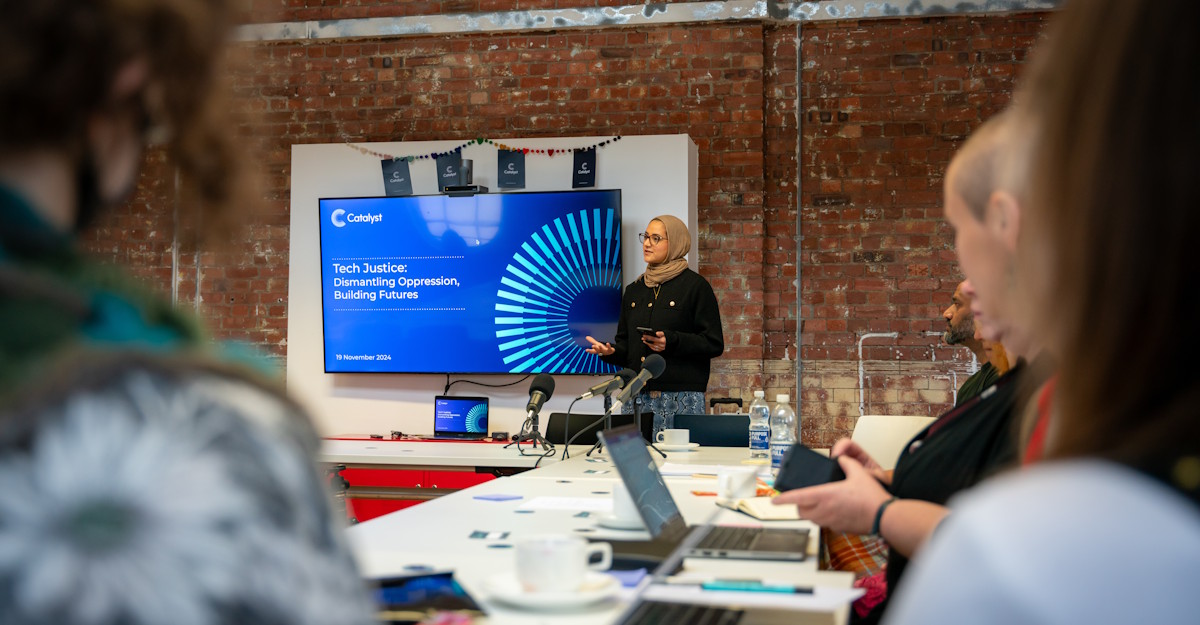
Building a more equitable AI future
AI can increase injustice, or drive liberation. Our latest Funders' Forum brought together not-for-profits and funders to explore who AI is harming. They also considered...

Inside the Tech Justice Road Trip #5
Project members reflect on their past 2 weeks. They share thoughts and opinions on AI, and how to help non-profits focus on tech justice. These...

Inside the Tech Justice Road Trip #4
Project members look back on their work so far. They tell us what’s been on their to-watch and to-read lists. And we find out what's...

Inside the Tech Justice Road Trip #3
Project members share their takeaways from the project’s storytelling workshop and describe their Ustopias. They also share some favourite examples of tech justice.

We piloted a wellbeing support fund: here’s what happened
What if workplace financial support for mental and emotional health was simple, accessible and stigma-free? What happens when we trust employees to decide what’s best...

Inside the Roadtrip #2: defining tech justice and the story so far
We ask project members to describe what tech justice is for them and how they imagine decolonising their evaluation work. They also tell us what's...

Degrowth, discovery and power sharing: why we will be doing less from April 2025
A new era is coming. Soon Catalyst will no longer be an organisation funding a network. Instead we'll be a 'lean organisation, supporting the tech...

Inside the Tech Justice Roadtrip #1: inspiration and challenge
Ever wondered what its like to be part of a sociocracy-inspired, multi-partner tech justice project working on feminist AI, participatory grant making and radical co-design?...

Introducing our new project: The Tech Justice Roadtrip
Working with communities to understand their experience of tech injustice. Reimagining ways that tech can liberate people. Supporting a movement.

Welcoming Sheeza, Kate and Hannah to Catalyst
New skills and experience arrive to freshen up the team. But who are they? And why did they choose to join Catalyst?
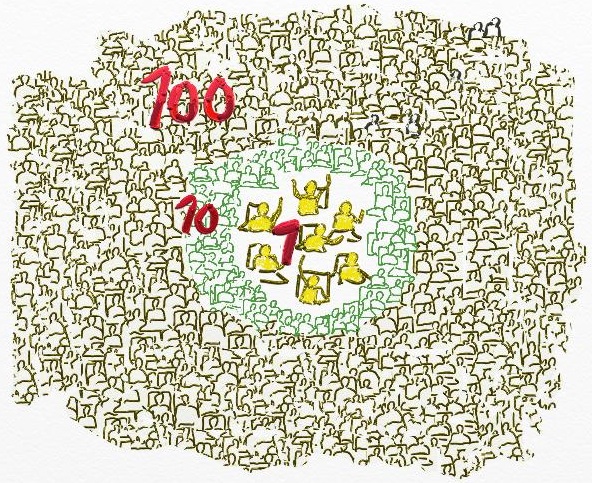
Network views: How AI creates injustice and inequity
We asked the Catalyst community “How do you think AI will (or is) contribute to injustice and inequity in the world?”.

Network views: How AI can create a fairer, more just world
We asked some of the Catalyst community the question “How do you think AI can (or is helping) create a fairer, more just world?”

Who is being left out? Systemic injustices in charities’ approach to digital work
The 2024 Charity Digital Skills Report reveals systemic injustices in digital work, highlighting that small, marginalised charities face significant digital inequalities and need more support.

Two partners, much ruminating, and goodbye to X
Find out why Passion4Social and Catalyst are leaving X, opting to use LinkedIn for community engagement and considering using new platforms to reach our audiences...
Five values, Two perspectives, One outcome
This article describes the partnership between Catalyst and Passion4Social. It is not a typical client-partner relationship. It goes far beyond that!

CAST and Catalyst: the journey, the transition – and beyond
CAST incubated Catalyst for five years, now it's independent. Collaborative review led to Catalyst becoming a Community Interest Company (CIC), with a new vision and...

Looking back, looking ahead: a peek inside Catalyst’s transition
Jo Morfee talks about what the team have been learning and feeling as Catalyst becomes a CiC and adopts a new vision.

Announcement: Catalyst will become a Community Interest Company in April 2024
Following a successful five-year incubation period by CAST, Catalyst is now transitioning to become an independent organisation.
It’s time for an ‘Ustopia‘: The Emerging Tech Justice Landscape in the UK
Dr. Ruha Benjamin advocates for 'Ustopia', challenging tech's harmful impacts, and urging community empowerment. Catalyst's recent research report explores Tech Justice in the UK, emphasizing...