


Weaving Liberation: organising for tech justice across borders
2nd February 2026
Share this article


Joe Roberson

Quick links
Weaving Liberation works across Europe (including the UK) to support digital justice organising. Here’s what they do and how to connect.
As Catalyst closes, we want to introduce you to people who are building the tech justice infrastructure the network will still need.
Spaces to meet, shared analysis, practical tools, and funding that follows movement priorities.
People and organisations who might help the network connect to places where energy, learning and resources are growing.
So we’d like to introduce you to Weaving Liberation, an initiative focussed on supporting and resourcing digital justice organising in Europe. They build power, solidarity, and shared vision that helps movements organise for tech justice.
They’re also preparing a participatory digital justice fund, due to launch in the first half of 2026. Participatory means decisions about funding sit closer to communities (rather than sitting only with institutions).
“Weaving Liberation is stewarding a programme of interventions… to create the conditions for digital justice organising in Europe.”
— Salmana Ahmed, Co-Director, Weaving Liberation
Weaving Liberation also advised us during our Kindling grant application assessment process, helping us sense-check our final shortlist when we got stuck.
We’re grateful to Salmana Ahmed and Laurence Meyer for their direct input in sharing Weaving Liberation’s work with the Catalyst Network.
About Weaving Liberation
Weaving Liberation stewards “A Vision for Digital Justice Organising in Europe”. They run retreats and convenings, publish toolkits and resources, support peer learning, and will soon be making grants to move money where movements need it. For example, Weaving Liberation has been working on resisting digital policing and life affirming visions of technology and creating cross-movement spaces for digital justice organising such as their Digital Liberation Retreat..
‘A vision for Digital Justice Organising in Europe’ – has been shaped through collective design with 30+ people across:
- racial justice
- migrant justice
- sex workers’ rights
- queer and transfeminist justice
- disability justice
- digital rights
- resource mobilisation and philanthropy.
Working across Europe – not just the EU
Digital justice issues are transnational: harms travel, companies operate across borders, and strategies have to move with that reality. This matters in areas like digital policing and surveillance, and in the infrastructure behind technology – data centres and extractive supply chains (energy, minerals, land and labour). Weaving Liberation works across Europe, including with groups in the United Kingdom.
“What is a common thread… are the companies… They are the core question.”
— Laurence Meyer, Co-Director, Weaving Liberation
“How do we make sure that the organising we do is not preventing organising elsewhere?… When we organise against a data center in the UK or in Ireland, and then the data center is moved to Spain… [that] doesn’t solve the problem.”
— Laurence Meyer, Co-Director, Weaving Liberation
The Weaving Liberation team
 → Laurence Meyer (co-director) brings a background in law and anti-racist and Afro-feminist organising. She focuses on power: who’s in the room, who’s missing, and what becomes ‘normal’ in policy decisions.
 ← Salmana Ahmed (co-director) brings a background in philanthropy and digital rights grantmaking. She pushes for resource justice – changing how decisions and money move in philanthropy.
The current team also includes Adelaide Hirwe (Operations Lead), Esra Özkan (Movement Doula) and Ari Robey-Lawrence (Communications Lead). Weaving Liberation also has an Accountability Committee that includes Anasuya Sengupta, Luam Kidane, and Joan Monique Steijns.
“We’re trying to… make digital justice organising an irresistible movement.”
— Laurence Meyer, Co-Director, Weaving Liberation
Digital justice organising is about power-building
Digital justice organising means building power with communities to challenge how technology concentrates power. This needs collective action – across communities, sectors, and borders.
“Organising at its core is always power building… and the ways to do that when it comes to digital justice… is first breaking the myth… that everything that is digital is too complicated for people to grasp.”
— Laurence Meyer, Co-Director, Weaving Liberation
Digital justice organising includes four core practices:
- treats “digital” as something everyone has a stake in – because people collectively produce it and live inside its consequences.
- breaks the myth that tech is too complex to engage with. It challenges complexity and jargon used to block participation.
- reclaims language: it helps communities refuse imposed terms and create the vocabulary they need to describe harm and build futures.
- moves from reactive resistance into building liberatory futures – practical, lived alternatives people can build towards – by creating the material, relational, and political conditions that make that shift possible.
“The narrative around… technology… [is] severed from the political conditions and contexts in which tech power is being concentrated… When really what we’re seeing is… across Europe, a tech-enabled fascist… movement and project.”
— Salmana Ahmed, Co-Director, Weaving Liberation
What Weaving Liberation is doing in 2026
Weaving Liberation is building a set of connected interventions: regranting, convening, peer learning, and longer-term experiments in how resources move.
A participatory digital justice fund (launch planned for first half of 2026)
Their upcoming grant programme will fund groups working at the intersection of technology and justice – across racial, economic, environmental, disability, migrant, transfeminist and queer justice.
“We are in the process of designing and… going live with our first fund… it will be the first Europe-wide participatory fund resourcing digital justice organising.”
— Salmana Ahmed, Co-Director, Weaving Liberation
Digital Liberation Retreat (September 2026, Bosnia)
Every 18 months they host the Digital Liberation Retreat. The retreat is a five-day space for cross-movement connection, knowledge and practice sharing, and relationship-building – held in a regenerative setting.
“We’re bringing together 70-plus people in Bosnia again in September… [to] activate imaginations towards what we want, as opposed to just resisting what we don’t want.”
— Salmana Ahmed, Co-Director, Weaving Liberation
Life-affirming visions of technology, collective safety and liberation
Weaving Liberation runs a peer practice learning programme led by their Movement Doula, Esra Özkan, rooted in abolitionist principles and practice – asking what safety looks like without policing, and what communities need to build care and accountability. This work grows from years of organising and analysis on how policing uses technology, and it supports people to build practical alternatives.
“How do we move beyond just an analysis of the harms… and… think about operationalizing… differently?… What does a world without policing look like? What do infrastructures of care look like?”
— Salmana Ahmed, Co-Director, Weaving Liberation
Resource justice and solidarity infrastructures
“Resource justice” is a core framing for Weaving Liberation’s work. Resource justice means shifting who controls money and material resources, and how decisions about them get made.
They are currently working with other intermediaries, artists and organisers as part of the Solidarity Infrastructures collective to explore how to mobilise resources to strengthen movements’ financial autonomy and resilience.
One early intervention in this work is exploring acquiring and stewarding land and space (in Europe and Africa) as shared infrastructure for organising, imagining, and refuge – locally rooted and accessible transnationally.
“Our first intervention… is really thinking about… acquiring land or space… to have a space that we can collectively own and steward… a space for organizing, a space for imagining, a space for refuge.”
— Salmana Ahmed, Co-Director, Weaving Liberation
What to do next
If you want to explore Weaving Liberation’s work, start here:
- Read the Digital Liberation Retreat reflection
- Explore the Digital Policing Toolkit (made by organisers for organisers)
- Start with their programme page: a vision for digital justice organising in Europe
- Go deeper via the Decolonising Blueprint (learnings and tools from the decolonising process that led to the programme)
- Follow their writing directly: Salmana Ahmed and Laurence Meyer.
—
Main image credit: Kruthika N.S. (TheWorkplaceDoodler)
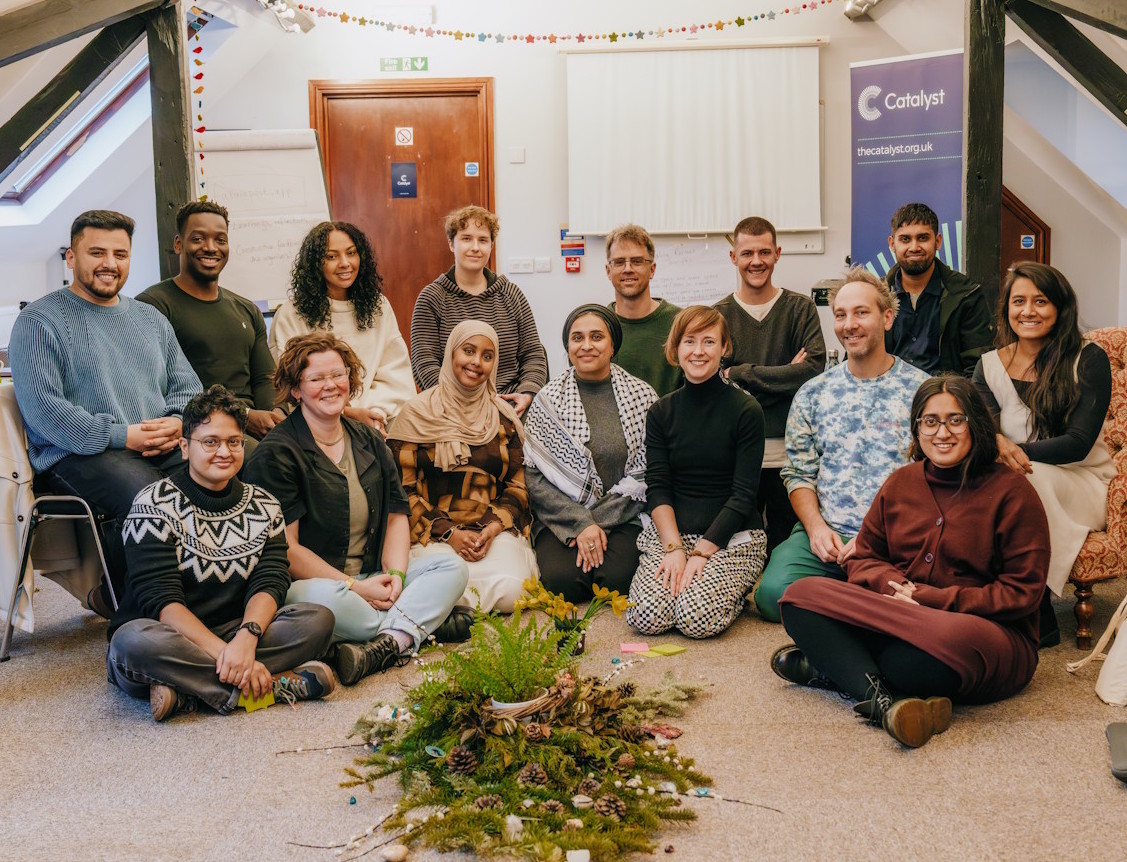
The Kindling Gathering: seeding what comes next
Seven collective learnings from 2 days of tech justice work, care and connection.

How 2025's charity digital trends are deepening inequity
Many organisations are investing in tools before investing in justice for the communities they serve. Here are some actions organisations can take in solidarity with...

Kindling Programme: grant funding
Catalyst is seeking 10 individuals and organisations wanting to explore, develop or sustain work that puts tech justice into practice.

Sheeza Shah on her time at Catalyst
As Sheeza Shah steps down as a Catalyst co-director, we asked her to share honest reflections on her journey, the meaning of tech justice, and...

The Catalyst network’s 2024/25 highlights
2024/25 was a turning point for Catalyst. Becoming an independent Community Interest Company let us put justice at the heart of our work. Our achievements...

Inside the Tech Justice Road Trip #7
Project members reflect on their time on Catalyst's Tech Justice Road Trip. They share some of their insights and gains from the project. They also...

Inside the Tech Justice Road Trip #6
Project members look back on their past 2 weeks. They share their progress and how their work has impacted others. They also share how belonging...
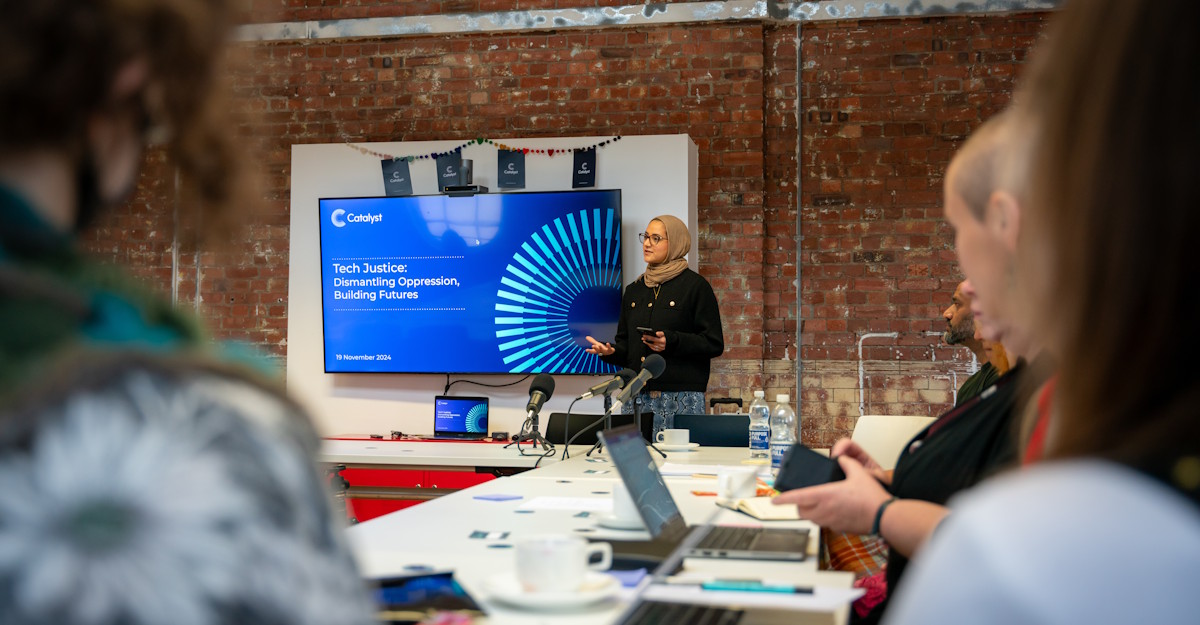
Building a more equitable AI future
AI can increase injustice, or drive liberation. Our latest Funders' Forum brought together not-for-profits and funders to explore who AI is harming. They also considered...

Inside the Tech Justice Road Trip #5
Project members reflect on their past 2 weeks. They share thoughts and opinions on AI, and how to help non-profits focus on tech justice. These...

Inside the Tech Justice Road Trip #4
Project members look back on their work so far. They tell us what’s been on their to-watch and to-read lists. And we find out what's...

Inside the Tech Justice Road Trip #3
Project members share their takeaways from the project’s storytelling workshop and describe their Ustopias. They also share some favourite examples of tech justice.

We piloted a wellbeing support fund: here’s what happened
What if workplace financial support for mental and emotional health was simple, accessible and stigma-free? What happens when we trust employees to decide what’s best...

Inside the Roadtrip #2: defining tech justice and the story so far
We ask project members to describe what tech justice is for them and how they imagine decolonising their evaluation work. They also tell us what's...

Degrowth, discovery and power sharing: why we will be doing less from April 2025
A new era is coming. Soon Catalyst will no longer be an organisation funding a network. Instead we'll be a 'lean organisation, supporting the tech...

Inside the Tech Justice Roadtrip #1: inspiration and challenge
Ever wondered what its like to be part of a sociocracy-inspired, multi-partner tech justice project working on feminist AI, participatory grant making and radical co-design?...

Introducing our new project: The Tech Justice Roadtrip
Working with communities to understand their experience of tech injustice. Reimagining ways that tech can liberate people. Supporting a movement.

Welcoming Sheeza, Kate and Hannah to Catalyst
New skills and experience arrive to freshen up the team. But who are they? And why did they choose to join Catalyst?
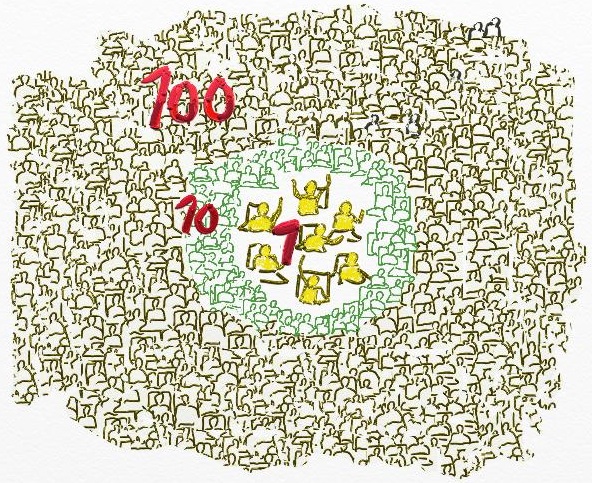
Network views: How AI creates injustice and inequity
We asked the Catalyst community “How do you think AI will (or is) contribute to injustice and inequity in the world?”.

Network views: How AI can create a fairer, more just world
We asked some of the Catalyst community the question “How do you think AI can (or is helping) create a fairer, more just world?”

Who is being left out? Systemic injustices in charities’ approach to digital work
The 2024 Charity Digital Skills Report reveals systemic injustices in digital work, highlighting that small, marginalised charities face significant digital inequalities and need more support.

Two partners, much ruminating, and goodbye to X
Find out why Passion4Social and Catalyst are leaving X, opting to use LinkedIn for community engagement and considering using new platforms to reach our audiences...
Five values, Two perspectives, One outcome
This article describes the partnership between Catalyst and Passion4Social. It is not a typical client-partner relationship. It goes far beyond that!

CAST and Catalyst: the journey, the transition – and beyond
CAST incubated Catalyst for five years, now it's independent. Collaborative review led to Catalyst becoming a Community Interest Company (CIC), with a new vision and...

Looking back, looking ahead: a peek inside Catalyst’s transition
Jo Morfee talks about what the team have been learning and feeling as Catalyst becomes a CiC and adopts a new vision.

Announcement: Catalyst will become a Community Interest Company in April 2024
Following a successful five-year incubation period by CAST, Catalyst is now transitioning to become an independent organisation.
It’s time for an ‘Ustopia‘: The Emerging Tech Justice Landscape in the UK
Dr. Ruha Benjamin advocates for 'Ustopia', challenging tech's harmful impacts, and urging community empowerment. Catalyst's recent research report explores Tech Justice in the UK, emphasizing...